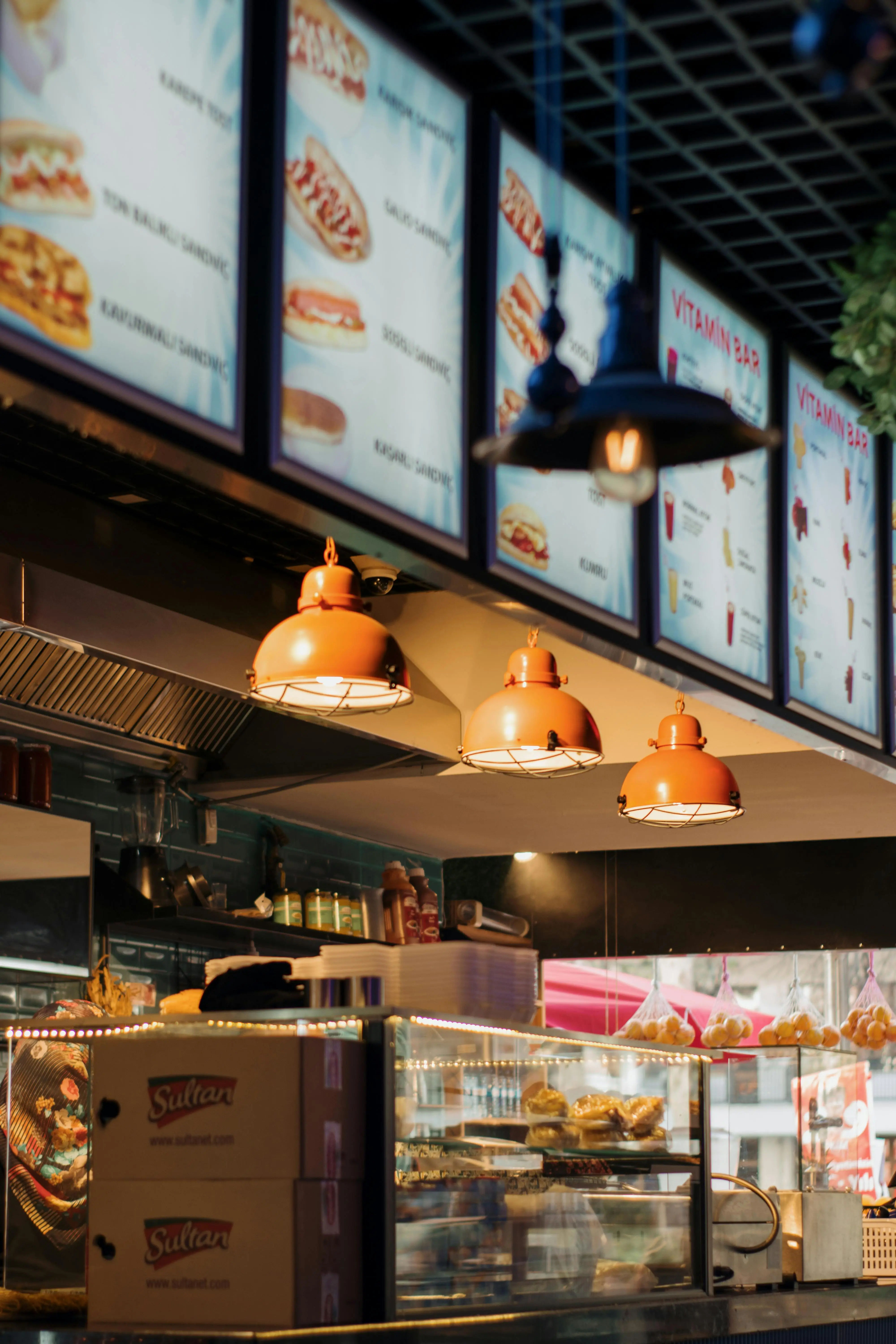
What Is a Self-Ordering Kiosk?
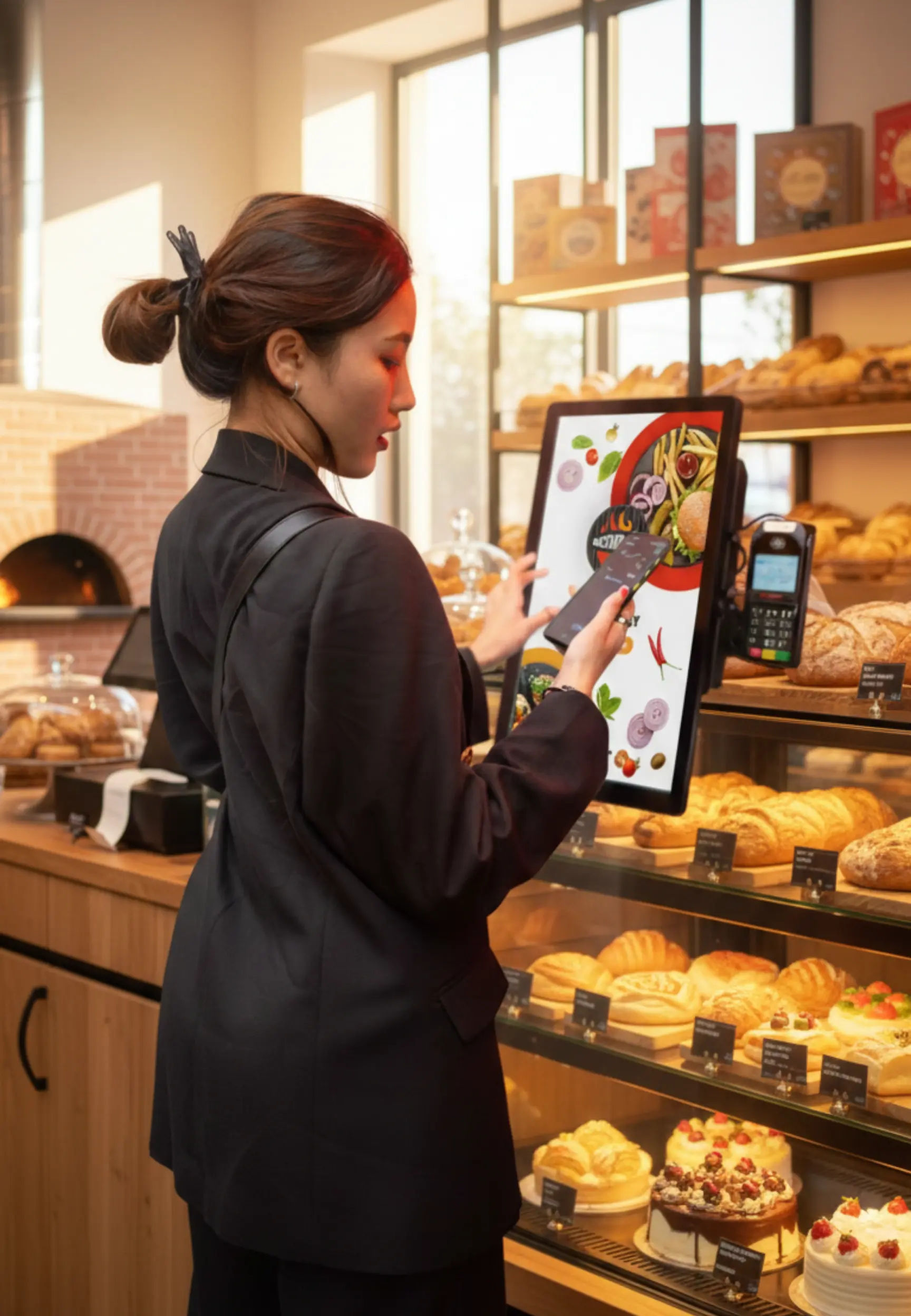
A self ordering kiosk is a touch screen ordering kiosk placed inside a restaurant that allows guests to browse the menu, customize their order, and pay independently.
Instead of waiting in line to place an order with staff, customers interact directly with a digital interface. The system guides them step by step through each stage shown below.

Orders route directly to the kitchen display system or printers, just like counter orders.
A modern restaurant self ordering solution is more than hardware. It includes self ordering software that manages menu logic, inventory syncing, reporting, and POS integration in real time.
Self-Ordering vs Counter Ordering
Most restaurants still rely heavily on counter ordering. It works, but it has limits.
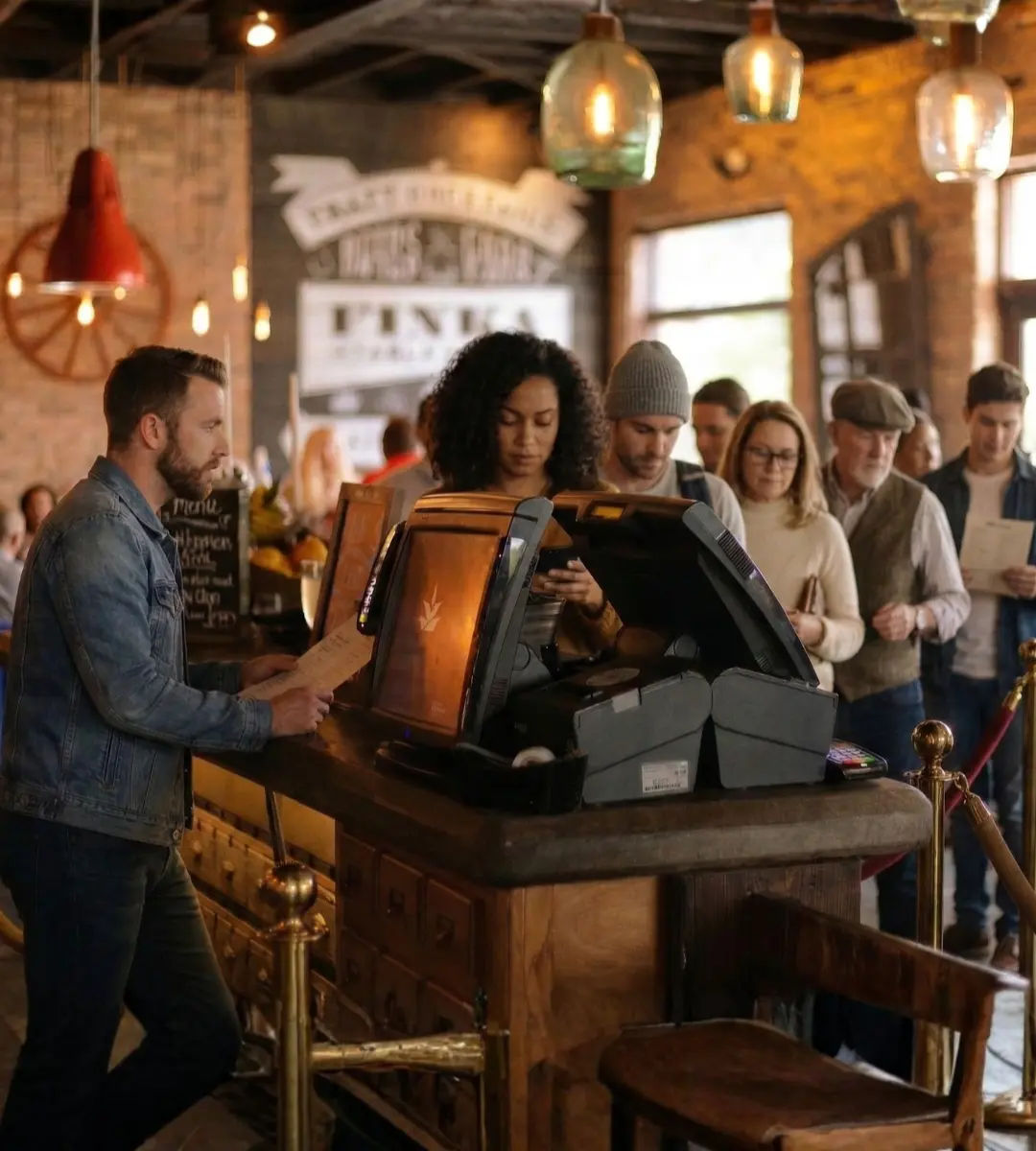
Counter Ordering
With traditional counter ordering:
During peak hours, even experienced teams feel pressure. When lines grow, staff rush. When staff rush, accuracy drops.
Counter ordering performance depends heavily on the individual team member.
Self-Ordering Kiosks
A self ordering kiosk removes that bottleneck.
Guests:
Restaurants gain:
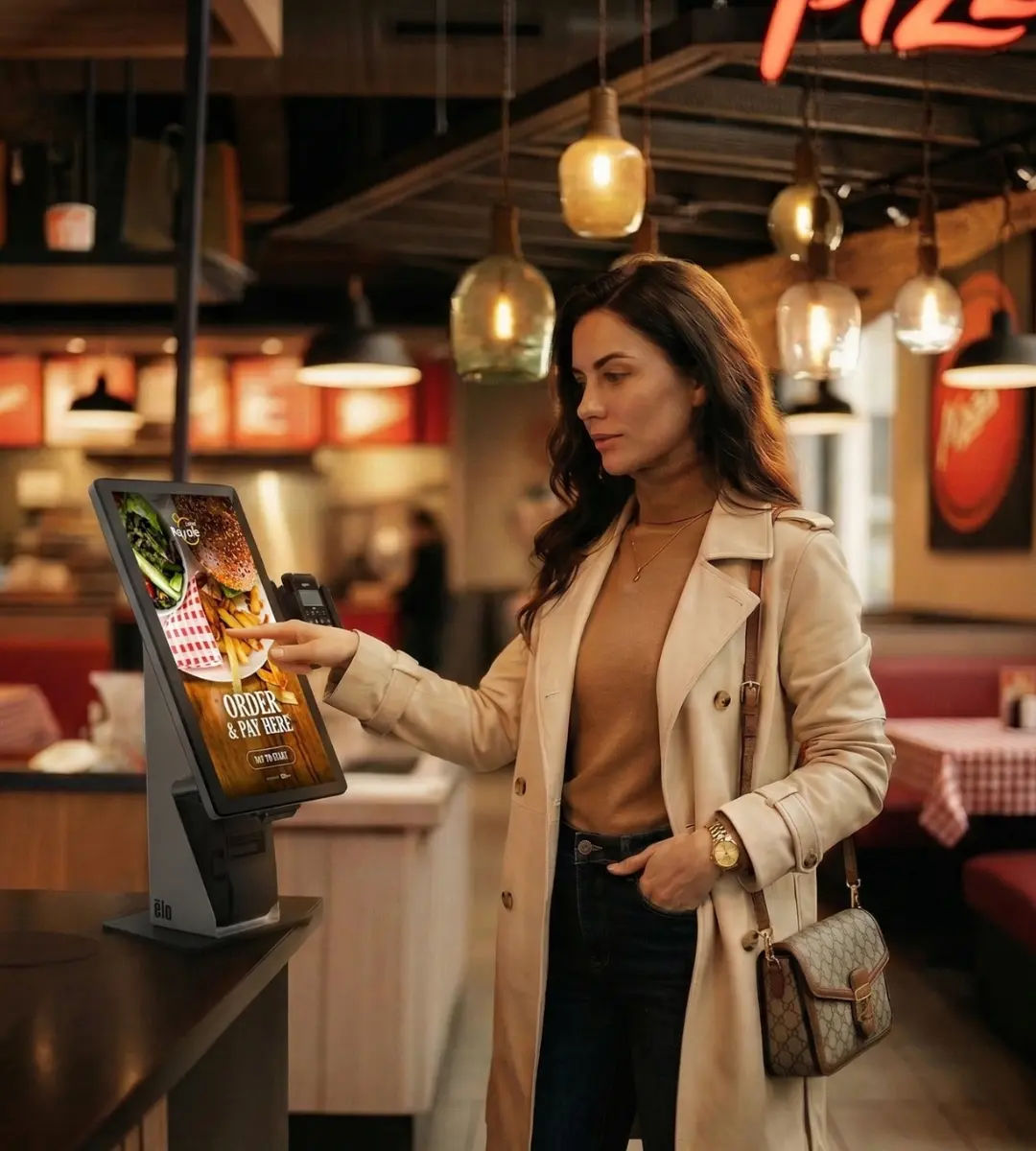
The system performs consistently every shift. It doesn’t forget to offer a drink. It doesn’t skip modifiers.
Benefits for Restaurants
A strong ordering kiosk system impacts revenue, labor efficiency, and guest experience at the same time.
Higher Average Order Value
Restaurants commonly see 20–30% growth in average ticket size after implementing a self ordering kiosk. Kiosks increase ticket size because they:
- Present add-ons visually
- Suggest upgrades automatically
- Promote bundles consistently
- Highlight premium items at the right moment
Upselling becomes systematic instead of optional.
Faster Throughput
A touch screen ordering kiosk increases ordering capacity without expanding your counter. Multiple kiosks allow parallel transactions. That means:
- More orders per hour
- Less visible congestion
- Better peak performance
Fewer Order Errors
Guests select modifiers directly and review their full order before paying. This reduces remakes and protects margins.
Better Labor Allocation
Self-ordering shifts staff away from repetitive order-taking and toward:
- Food preparation
- Accuracy
- Hospitality
- Fulfillment speed
It improves overall operational balance.




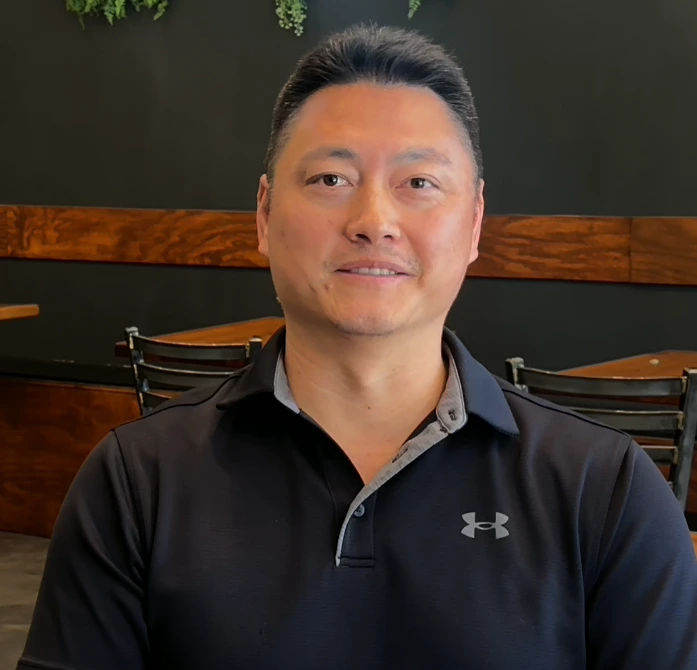

Hear Why
Our Customers
Choose Us
"We didn't want to deal with long lines or order mistakes later, so, we started with Applova kiosks and POS right from day one."
Shahana Sulthana
Owner
I Love Mochi, Coralville, IA
What to Look for in Self-Ordering Software
SaaS-First Architecture
A SaaS-based self ordering kiosk allows:
• Remote menu updates
• Real-time pricing changes
• Automatic feature improvements
• Multi-location control
• Centralized reporting
Modern operators choose software-driven systems, not hardware-only solutions.
Strong Customization Logic
Your restaurant likely has:
• Modifier groups
• Combo rules
• Conditional pricing
• Add-on structures
Your ordering kiosk system must support these without friction.
Smart Upsell Engine
Look for a system that:
• Suggests relevant add-ons
• Promotes bundles
• Supports premium upsells
• Feels natural, not intrusive
POS Integration
Your restaurant self ordering platform must integrate tightly with your POS so:
• Pricing stays accurate
• Inventory stays synced
• Reporting stays unified
• Orders route cleanly to kitchen systems
Disconnected systems create operational risk.
Why Restaurants Are Shifting to Self-Ordering
Self-ordering is no longer experimental. It’s becoming operational infrastructure.
Consumers are comfortable using touch screen ordering kiosks in retail, grocery, airports, and national restaurant chains.
The shift is driven by economics:
- ✔ Labor costs are rising
- ✔ Margins are tightening
- ✔ Guest expectations are increasing
A self ordering kiosk improves throughput and ticket size without increasing payroll.
It scales. You can start with one kiosk and expand based on performance.
Kiosk Placement & Revenue Performance
The placement of your restaurant ordering kiosk directly impacts throughput, upsell exposure, and overall revenue lift. Choosing the right format depends on your layout, traffic flow, and peak-hour volume.
.webp)
Countertop
Compact and efficient, countertop kiosks work well in tighter restaurant layouts or near existing registers.
Best for:
- •Smaller footprints
- •Cafés and fast casual concepts
- •Add-on ordering near pickup counters
Ideal for capturing last-minute upgrades, drink add-ons, and impulse items without disrupting your existing setup.

Wall-Mounted
Wall-mounted kiosks keep pathways clear while expanding ordering capacity.
Best for:
- •High-traffic QSR layouts
- •Narrow dining areas
- •Restaurants with defined entry flows
By moving ordering off the counter and onto the wall, you reduce congestion and increase parallel transactions during rush hours.
.webp)
Floor-Standing
Floor-standing restaurant self ordering kiosks offer the highest visibility and strongest upsell exposure.
Best for:
- •High-volume locations
- •Multi-unit operators
- •Food halls, campuses, and airport venues
These units maximize throughput and give guests a clear starting point for ordering. During peak hours, they significantly increase transaction capacity and average ticket performance.
The right placement turns your kiosk into a revenue-generating asset, not just an ordering tool.
Request a demoThe Operational Impact of Self-Ordering
Beyond features, the real impact shows up in day-to-day operations. Restaurants that implement a self ordering kiosk often report:
Instead of managing growing lines, teams focus on production and hospitality.
Self-ordering does not eliminate human interaction. It improves where human interaction is most valuable.
Where Self-Ordering Works Best
A restaurant self ordering system performs especially well in:
- ✔ Quick service restaurants
- ✔ Fast casual concepts
- ✔ Pizza shops
- ✔ Cafés and bakeries
- ✔ Boba and beverage shops
- ✔ Food halls
- ✔ Campus dining
- ✔ Airport concessions
Any environment where speed, customization, and throughput matter will see measurable impact.